LISTEN: The Manila Poker Club and a forgotten rescue story

On episode 17 of the Common Voices podcast, we sit down with author Mark Sy to discuss his new book on a largely forgotten chapter in WWII history

Click the above animation to listen to episode 17 of Common Voices, featuring author Mark Sy
On behalf of all of us at Allied Voices for Israel (AVI), we want to share a story that most people have never heard — and once you hear it, you won't understand why.
On the latest episode of our Common Voices podcast, AVI Founder and Executive Director Daniel Koren sits down with author Mark Sy, who was raised in Vancouver, Hong Kong, and the Phillippines, about his book The Manila Poker Club: Eisenhower, Quezon, and the Plan to Harbor Europe's Jews in the Philippines.
The book tells the almost unbelievable story of how a small circle of American and Filipino leaders — meeting informally over card games in Manila — engineered one of the most audacious rescue plans of the 1930s: a scheme to save Jews from Nazi persecution, thousands of miles from Europe.
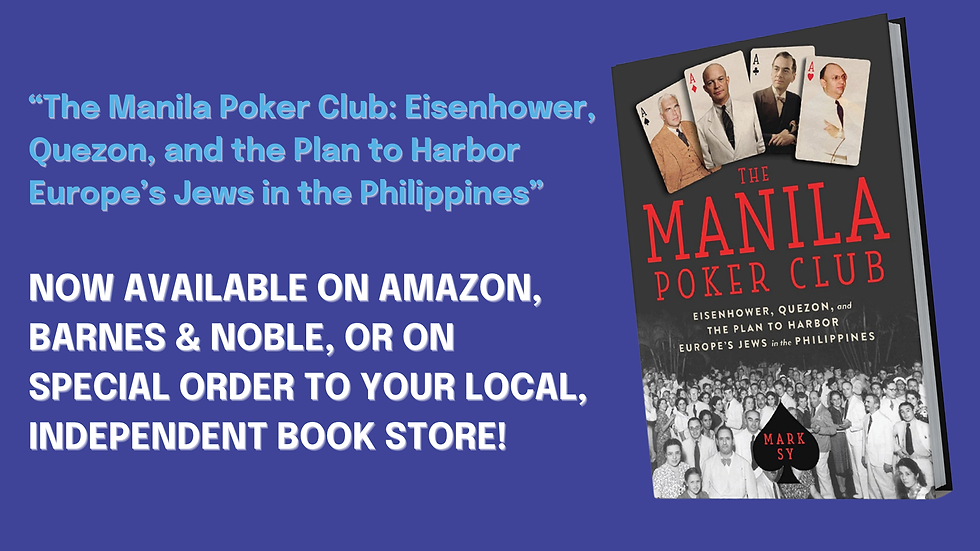
Click the above still to purchase the book!
Some of the details are extraordinary:
The plan was hatched at literal poker tables, where U.S. High Commissioner Paul McNutt, Philippine President Manuel Quezon, and a young Dwight Eisenhower discussed how to get Jewish refugees out of Europe and into the Philippines.
Out of these conversations came the McNutt-Frieder List, a mechanism that let refugees qualify for entry based on their occupations — turning bureaucratic categories into lifelines. From there emerged the Mindanao Project, an ambitious vision to resettle as many as 10,000 Jewish refugees on Philippine soil, at a time when most of the world was closing its doors. The Japanese invasion in 1941 cut the larger plan short, but not before roughly 1,300 Jewish refugees found safety in the Philippines.1,300 people alive today, and generations after them, because a handful of people decided to act.
Why did this extraordinary rescue effort remain so little known? Mark discusses how the people involved deliberately kept their work quiet, the refugees they saved scattered across the world after the war, and the Philippines' own postwar priorities shifted toward rebuilding a nation, leaving little room to memorialize a rescue effort most Filipinos themselves don't know took place on their soil. It's a striking case of how easily even monumental acts of moral courage can disappear from memory — which is exactly why we wanted to bring it to you.
To listen to A book discussion of “The Manila Poker Club: Eisenhower, Quezon, and the Plan to Harbor Europe’s Jews in the Philippines”, please click here.
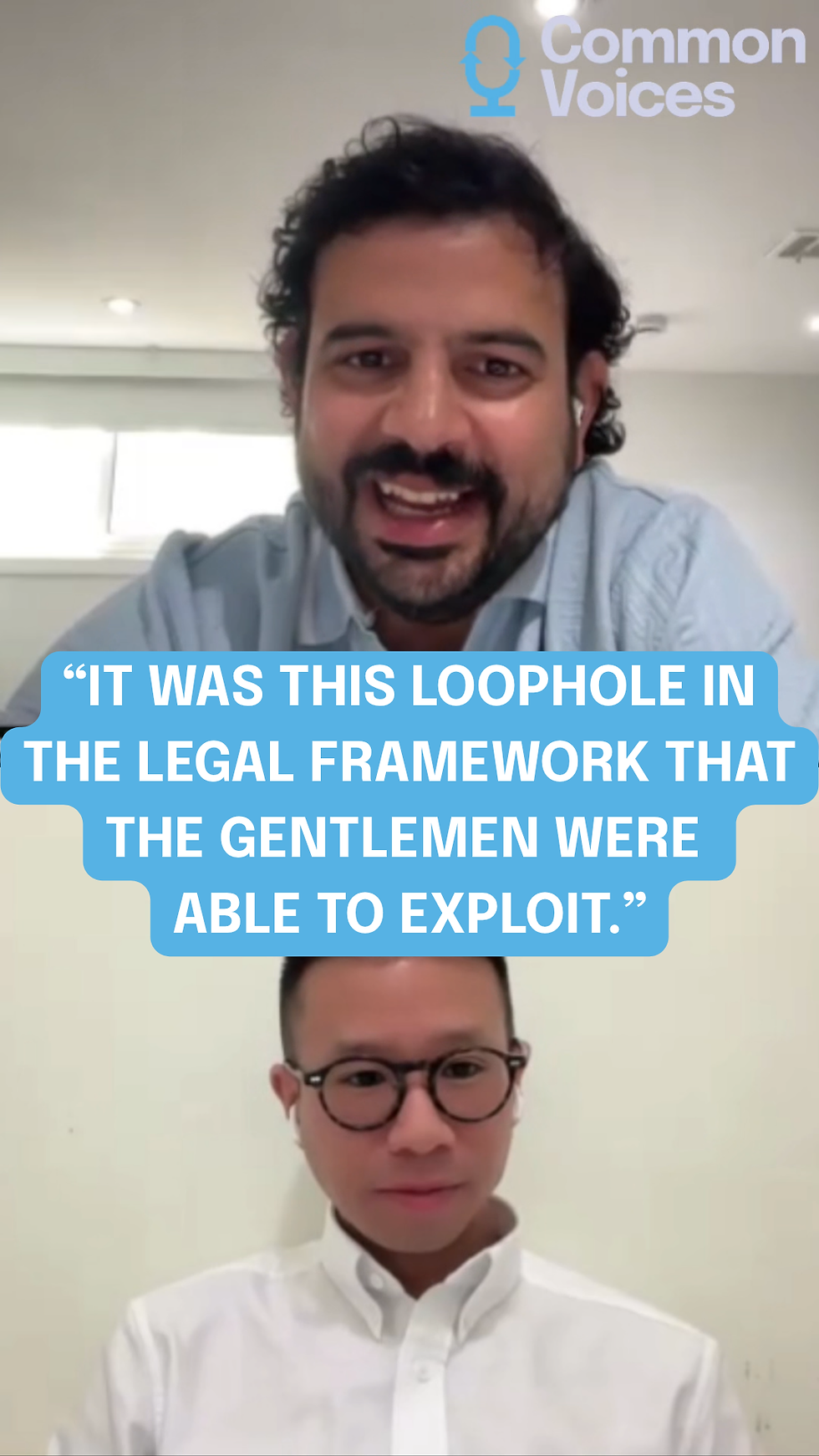
Click the above still to watch an excerpt of our latest episode with author Mark Sy, as he and Daniel discuss how a card game turned into a clandestine operation to save Jewish refugees during WWII
The episode also explores the enduring lessons of this history: the importance of moral courage in the face of prejudice, the power of cross-cultural cooperation, the dangers of disinformation, and the life-saving impact of humanitarian immigration policies during times of refugee crisis.
Mark shares what first drew him to this story during the pandemic, as well as moving survivor accounts—including the Weish family, who escaped Austria with the help of an unexpected German sponsor.
The Manila Poker Club is ultimately a story about ordinary human connections leading to extraordinary acts of courage—and a reminder that history can offer powerful lessons for the challenges we face today.


Comments